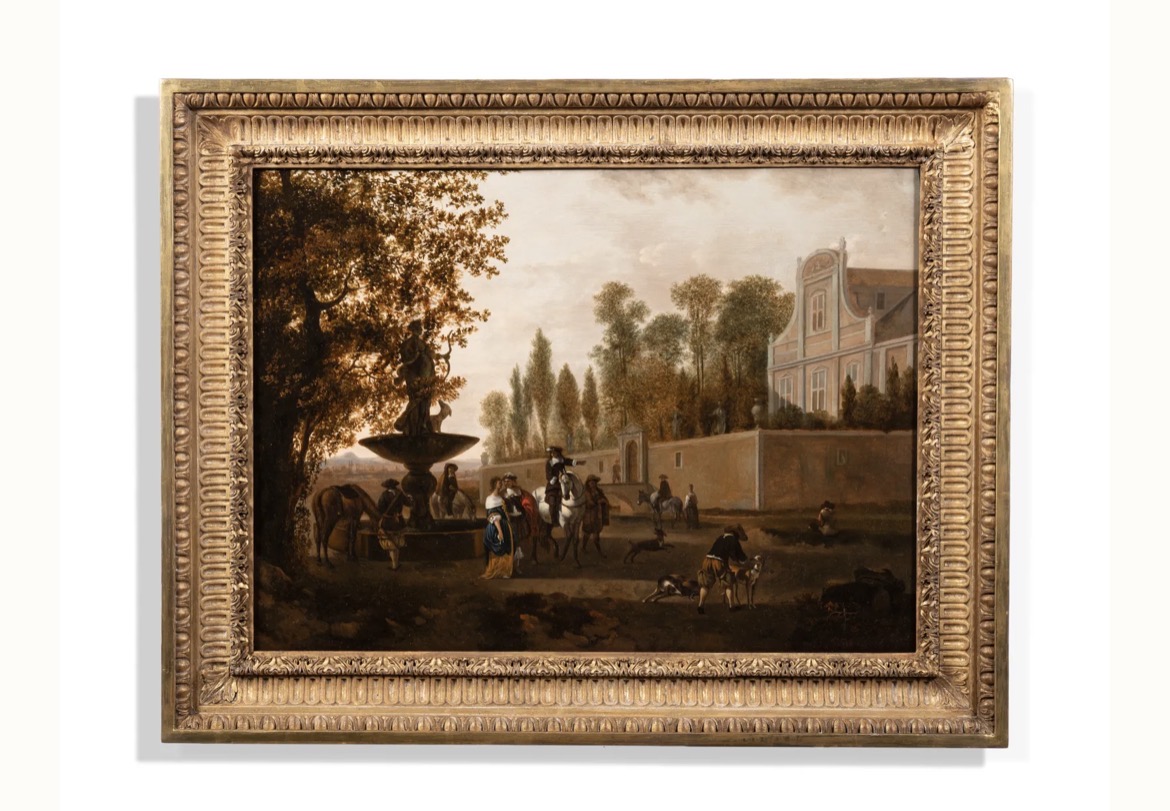
Attributed to Gerrit Adriaensz Berckheyde (1638-1698) , Courtyard scene with elegant ladies and horsemen gathered beside a large fountain, oil on panel, 17 3/8 x 23 5/8 in (44 x 60 cm). Courtesy The Parker Gallery
The lifespan of architect and dramatist John Vanbrugh (1664-1726) represents a broad sweep of English history. This year marks the tercentenary of his death and the foyer of the 2026 Autumn Fair will display an eclectic cross-section of pieces hailing from this period. Chronologically, this takes in the reigns of Charles II, James II, William III and Mary II, Anne and George I. England – which merged with Scotland, with the passing of the Act of Union in 1707, becoming the Kingdom of Great Britain – was exposed to overseas influences that enriched the country’s repertoire of decorative arts.
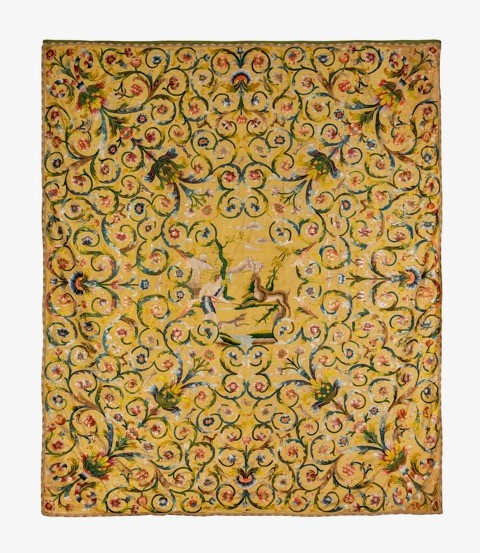
Italian wall-hanging comprising silk embroidery on silk ground with a Classical hunting scene at its centre, circa 1720. Courtesy Owen Parry
Within this timespan, three standout styles of furniture and decorative arts are named after a monarch – proof of their prominence: William and Mary (from 1689 to 1702); Queen Anne (1702 to 1714) and early Georgian (spanning 1714 to 1727).
Vanbrugh was hugely influential – a polymath who found success as a playwright during the Restoration period of 1660 to 1710 that followed the repeal of the Puritans’ 18-year ban on public stage performances. Vanbrugh’s plays, such as The Relapse of 1696, were controversial and modern for engaging with contemporary issues, such as defending women’s rights within marriage.
A colourful, ambitious personality, Vanbrugh rose to challenges others with less self-belief may have quailed from. An untrained architect, he nevertheless became a leading exponent of English Baroque architecture. Thanks to his chutzpah and connections to Britain’s elite, he secured the most prestigious country-house commissions of the day.
The flamboyant Charles II inspired a hunger for opulence, which hugely resonated with the end of Puritan rule, says exhibitor Giles Hutchinson Smith of Chalet White. “Charles II was exiled in a royal court in France and brought a love of French culture back to England, following the 1660 Restoration of the monarchy. And rich and poor alike appreciated the elaborate sets of the newly reopened theatres.” Vanbrugh favoured these himself – a link to his architecture (often described as theatrical). He frequently talked of the importance of “effect”, meaning architecture’s visual, theatrical impact.
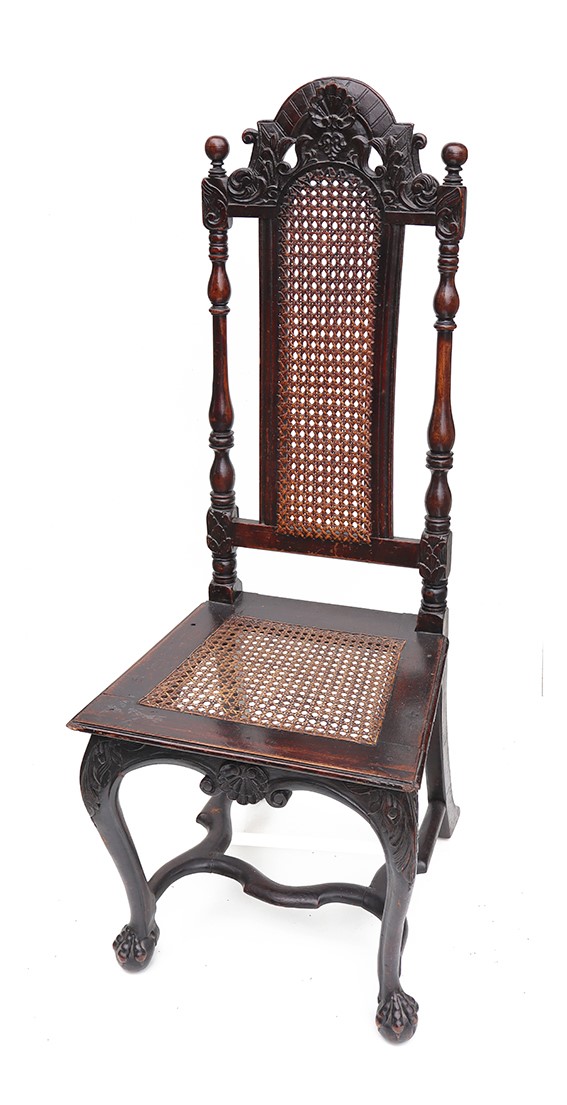
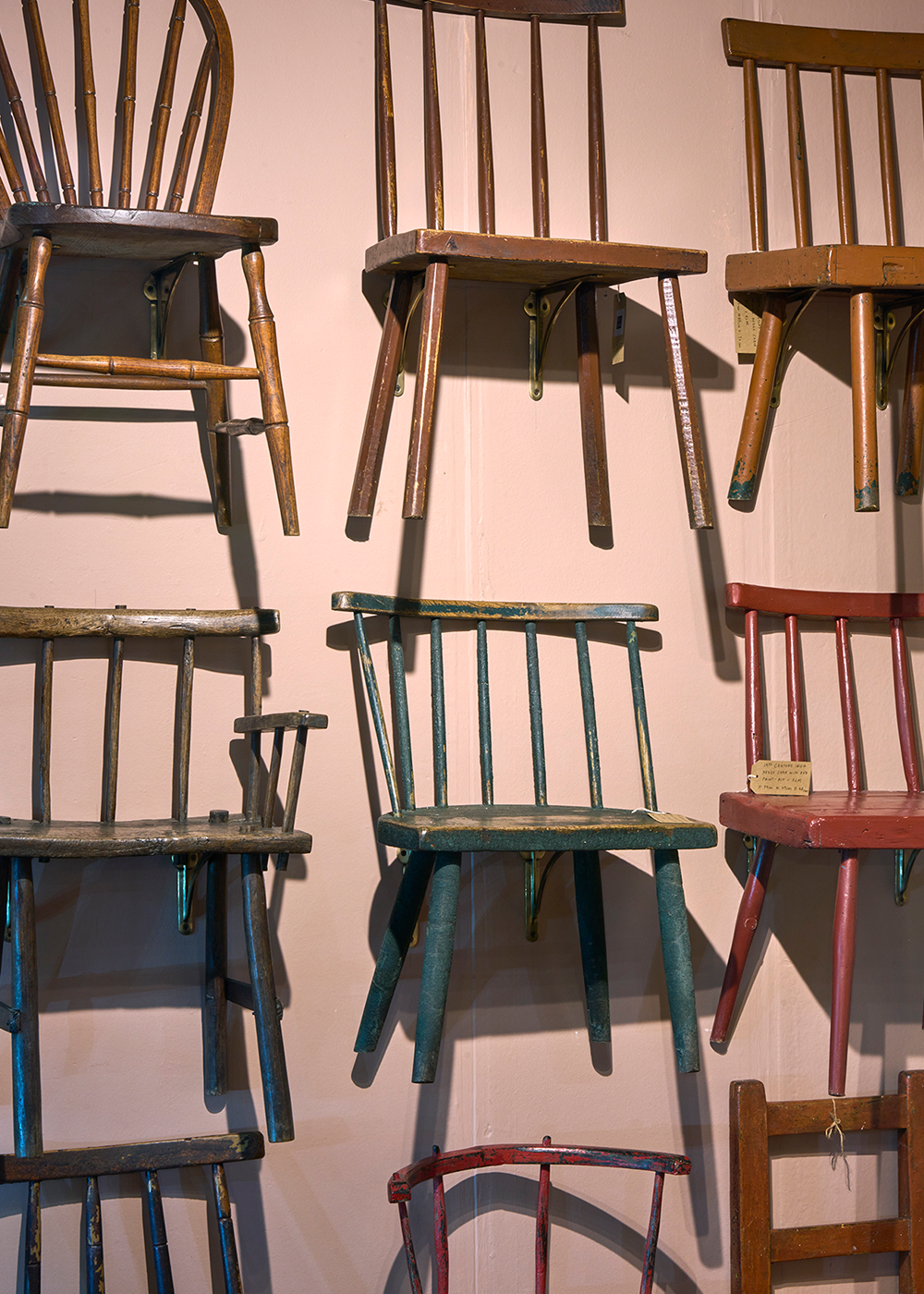
Early 18th century Dutch chair. Courtesy Galerie Arabesque
Parallelling the popularity of English Baroque architecture was a burgeoning taste for exoticism, with imported Asian goods entering Europe via the East India Company and Dutch East India Company, both founded in the early 17th century. Queen Mary was a tastemaker, decking out Kensington Palace and Hampton Court with Dutch Delftware and Far Eastern porcelain. Exhibitor Arabesque will show 17th-century Delft tiles and an 18th-century embroidered screen with a gilt frame.
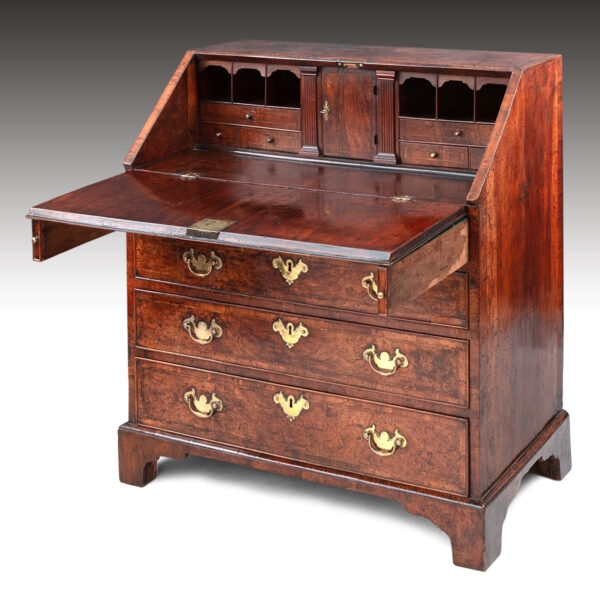
A George 1st walnut veneered bureau, circa 1720 with great colour (about as good as it gets !) and original throughout. It measures 36” wide, 40” high and 21” deep. Courtesy William Cook Antiques
Textiles were widely coveted. Kensington Palace was also adorned with sumptuous tapestries “in the Indian manner” – picturing scenes of Indian nobility – supplied by John Vanderbank, an English painter of Dutch extraction.
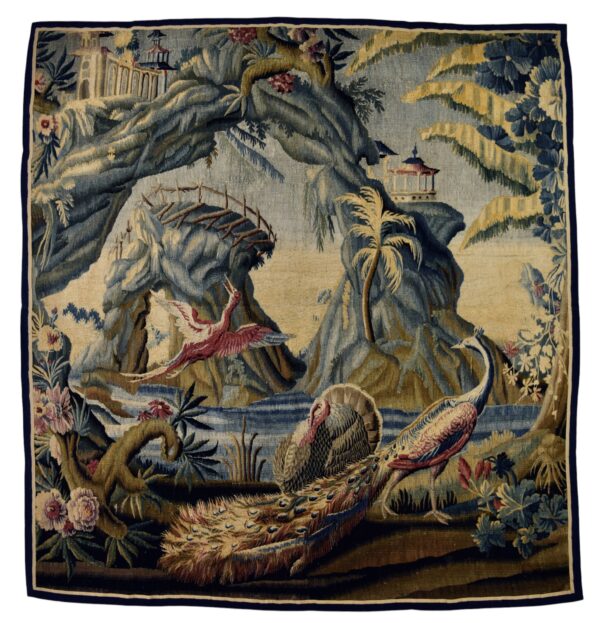
Rare Aubusson ‘Exotic’ Tapestry, dating from the early 18th century. Courtesy Joshua Lumley
Yet the period also encompasses the relatively restrained Queen Anne style. Typical pieces from this period include small tables, often boasting gently S-shaped cabriole legs, china and china display cabinets, all catering to the new tea-drinking custom.
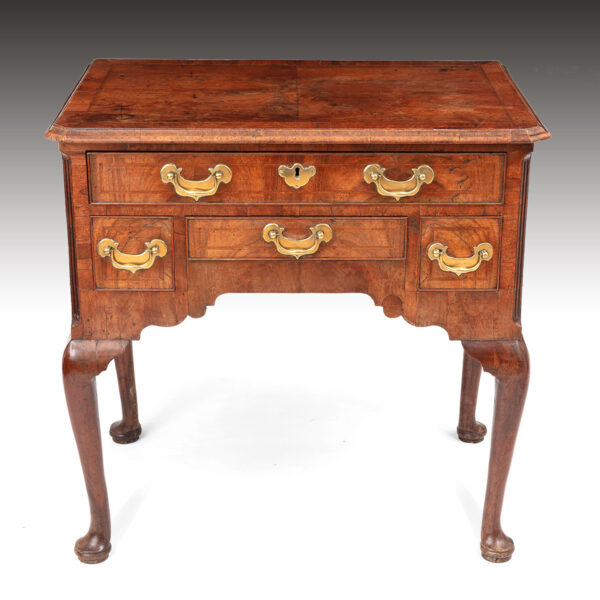
A George I period walnut veneered lowboy, circa 1720. Courtesy William Cook Antiques
Vanbrugh, the son of a wealthy merchant of Flemish descent, was a Whig and anti-Catholic. He supported the deposition of James II by the Protestant William of Orange. While visiting Calais, Vanbrugh was imprisoned for suspected espionage for four years, then released on parole. “Vanbrugh was at liberty for fourth months to observe French architecture and interior decoration,” says Charles Saumarez Smith, author of John Vanbrugh: The Drama of Architecture and co-curator, with architect Roz Barr, of the recent, eponymous exhibition at Sir John Soane’s Museum. Vanbrugh was dazzled by Louis XIV’s Palace of Versailles, then under construction.’
Vanbrugh’s admiration for Louis XIV’s pet project isn’t as contradictory as it might seem in light of his anti-Catholic stance. “Vanbrugh and his contemporaries showed it was possible to hold two apparently contradictory thoughts simultaneously,” says Anya Lucas, Director of The Georgian Group, which initiated Vanbrugh300, a year-long festival celebrating the tercentenary. “They loathed France’s absolutist monarchy and Roman Catholicism but were nevertheless inspired by the architecture of Paris and Rome.” This is evident at Blenheim Palace, designed for the Duke of Marlborough as a reward for defeating Louis XIV’s army at the Battle of Blenheim. “At Blenheim, Vanbrugh appropriated architectural forms preferred by the Duke’s enemies. Vanbrugh sling-shots the architecture of Louis XIV back across the Channel, even placing a stolen marble bust of the king on a principal elevation.”
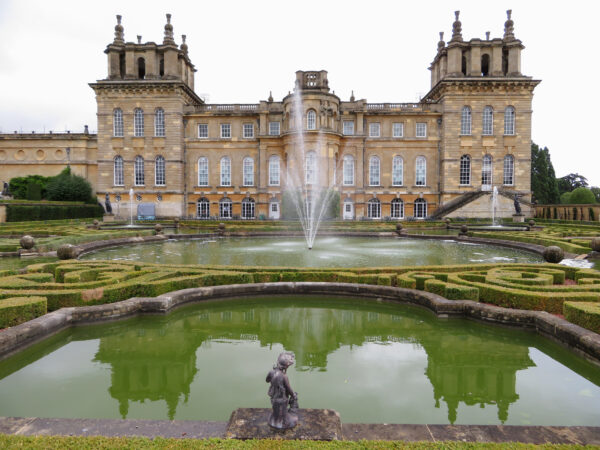
Blenheim Palace by Gareth James
In Vanbrugh’s day, walnut furniture was popular. Exhibitor Wakelin & Linfield will display an early 18th-century walnut chest of drawers and William Cook Antiques a George I walnut-veneered lowboy, made circa 1720.
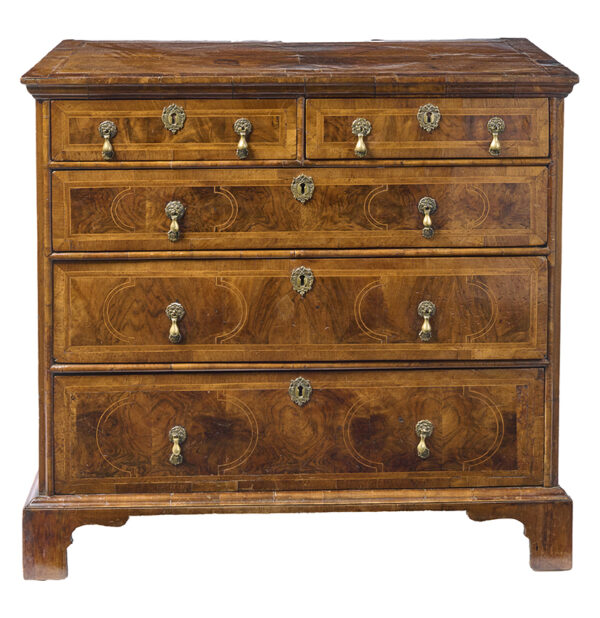
Early C18th walnut chest of drawers with geometric inlay, c1705. Courtesy Wakelin & Linfield
Giltwood items, lacquer and japanning (a European technique of coating wood, metal or leather with a glossy varnish imitating traditional East Asian lacquerware) were also coveted. Similarly appealing was Chinoiserie – a European mimicking of Chinese goods with roots in a Dutch fascination with the Far East. Chinoiserie wallpapers and porcelain featured such motifs as pagodas, phoenixes and dragons.
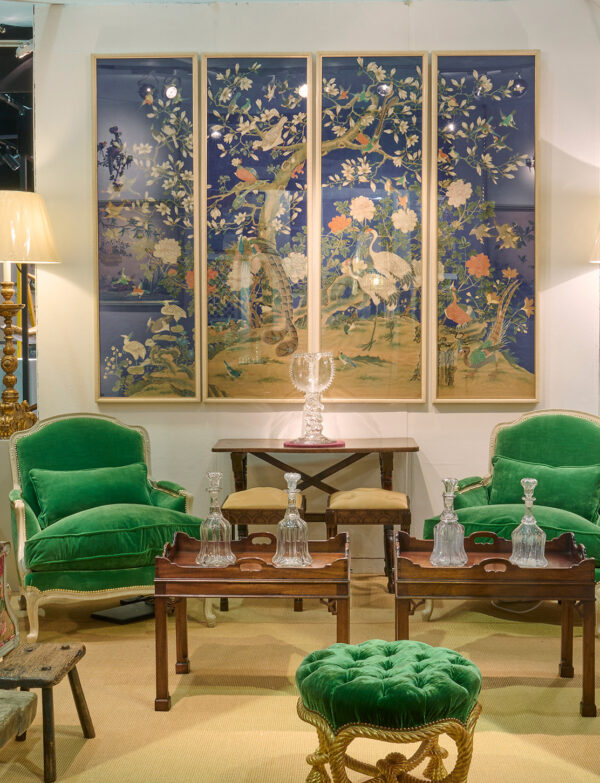
Chalet White’s stand at the Spring Decorative Fair featured a group of four chinoiserie wallpaper panels, mounted and framed for display as a work of art.
“It was more prestigious to have wallpapers made in China, a sign of the owner’s wealth,” says Hutchinson Smith. “A great example of Chinoiserie is a four-poster bed in Calke Abbey, Derbyshire, dating from 1715. It has blue silk curtains embroidered with butterflies, birds and trees that are lined with cream-coloured silk.”
There was also a huge demand for chintz, derived from the Hindi word “chint”, meaning spotted or variegated. “The East India Company helped popularise chintz in England,” says Avalon Fotheringham, lead curator of an exhibition called Chintz, which opens at the Victoria & Albert Museum in autumn, 2027. “Those who could afford it furnished whole rooms in Indian chintz. People were drawn to it for many reasons – its beauty, vibrancy, the fastness of its colours, texture of its cotton, the novelty of its designs and a fascination with its Indian origins.”
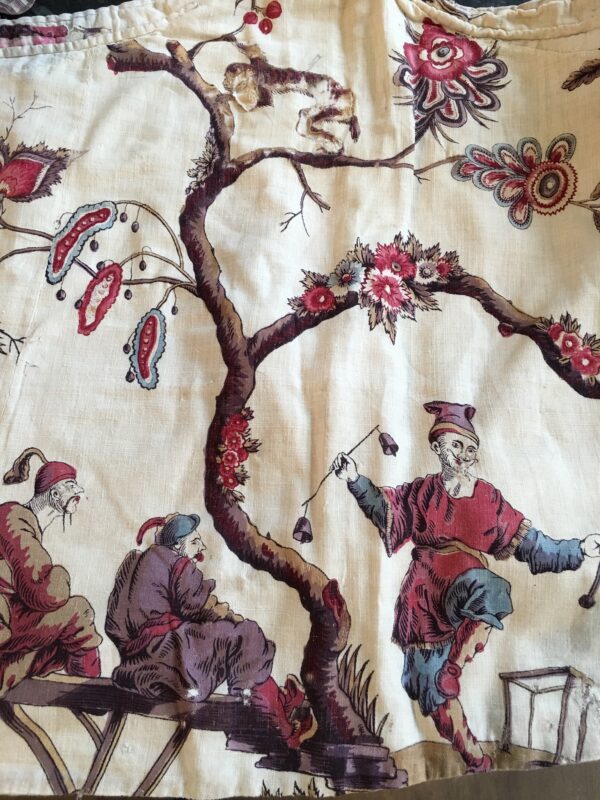
A European-made antique chintz with a chinoiserie pattern – stylized designs influenced by European ideas of the ‘orient’. Courtesy Su Mason
“Early chintzes exported to England were used as wall-hangings, bed-hangings, quilts and to some extent carpets,” she adds. “English crewelwork, European tapestries, Genoese velvets and Turkish and Persian carpets featured in aristocratic English interior design from 1660 to 1730. Luxury textiles were always about conspicuous consumption – material demonstrations of wealth and power.”
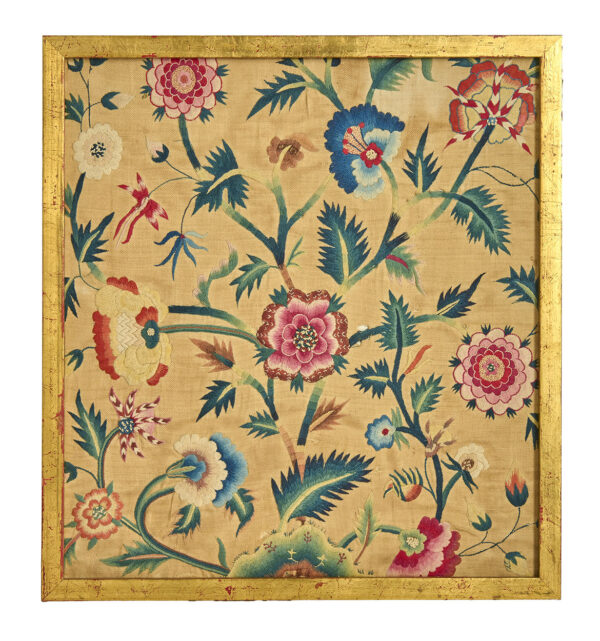
A crewel work panel, first half of the 18th century, with colours preserved almost as original. This pattern influenced by imported chintzes from India. Courtesy Gilbert Bannerman
By contrast, crewelwork was more accessible, says exhibitor Owen Parry, who specialises in rugs and textiles. “Crewelwork from the 17th century, made of coarsely spun wool, was within many people’s reach. Wool was a big part of Britain’s economy and crewelwork was made in local workshops or in homes. It essentially has floral patterns and motifs like birds and monkeys…” Parry will be showing an Italian, silk wall-hanging picturing a Classical hunting scene, created circa 1720.
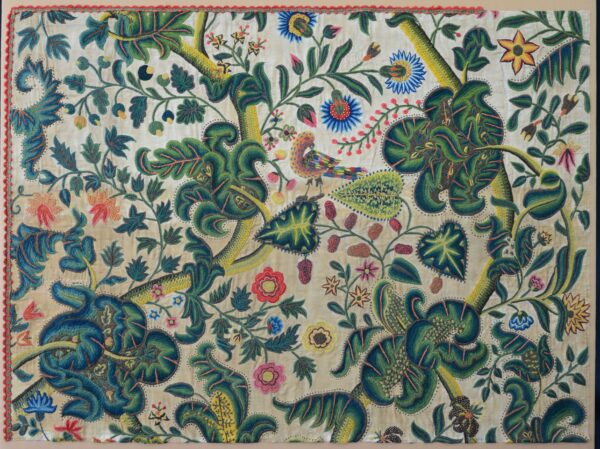
Two panels of late 17th century baroque crewel work, from Leeds Castle, Kent (from which two companion side hangings are now at a foundation in New York) were sold by Chalet White at a past Decorative Fair. Note the preservation of many colours still evident.
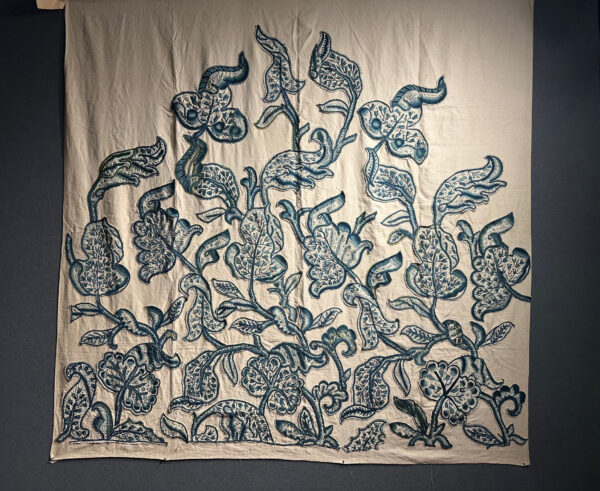
An early, mid-1600s section of crewelwork sold by Owen Parry at a past Fair. Here you can see how some of the original colours have faded over time leaving primarily blues and dusky greens.
Early Georgian design rejected late Restoration and Baroque ornamentation, embracing a comparatively pared-back style epitomised by wood-panelled walls or ceilings and walls decorated with plaster mouldings featuring Classical motifs.
Women artisans and entrepreneurs increasingly made their mark in 18th century Britain, coincidentally mirroring the progressive values expressed in Vanbrugh’s plays. Vanbrugh furnished his home – the immodestly named Vanbrugh Castle near Greenwich Park – with mirrors supplied by London cabinet-maker Elizabeth Gumley’s workshop, which also stocked fashionable gilt gesso tables with cabriole legs and japanned cabinets.
John Vanbrugh houses open to the public:
Blenheim Castle, opening times for the palace state rooms and gardens and parkland vary. For more information, visit blenheimpalace.com
Castle Howard, open from March 20 to October 31; castlehoward.co.uk
Seaton Delaval, open all year apart from Christmas Eve, Christmas Day and Boxing Day. Open from March to October, Wednesday to Sunday, 10am to 5pm. Open: November to February, Wednesday to Sunday 10am till 4pm; https://www.nationaltrust.org.uk/visit/north-east/seaton-delaval-hall
For details of Vanbrugh300 events, visit:
https://www.vanbrugh300.co.uk/
Article written for The Decorative Fair by Dominic Lutyens, freelance journalist on art, architecture, design and fashion, and author of several books on design, and another on fashion designer Celia Birtwell.
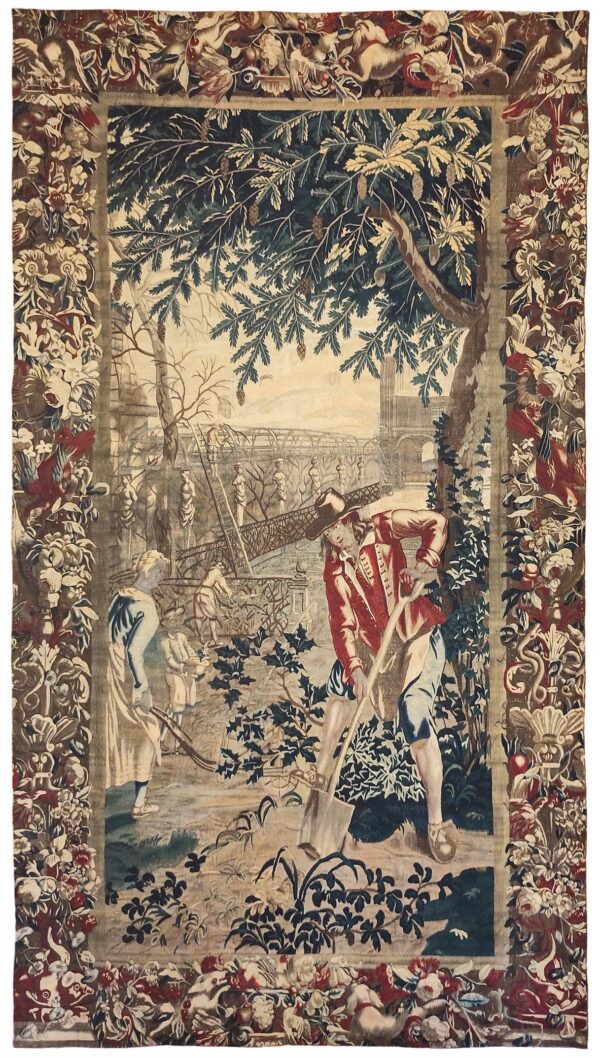
A 17th century English tapestry, Spring, c1680. Woven in London, possibly by Thomas Poyntz at Hatton Garden. Courtesy Textile Antiques.