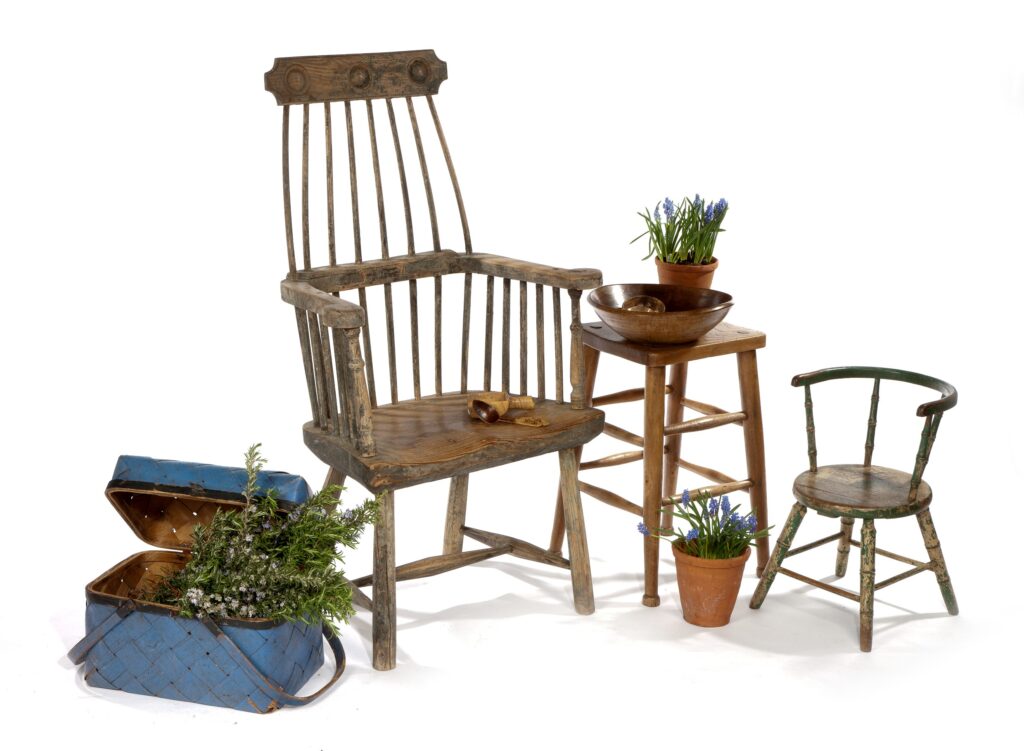
Vernacular furniture, as it’s known in the antiques trade, was first widely coveted well over a half century ago. This sub-genre of furniture and other household items is associated with overlooked regional, rural pieces. The term, vernacular, is derived from the Latin word vernaculus, meaning domestic, native and indigenous. It entered the English language in the 1600s, initially referring to native language, then to the everyday speech or dialect of a locality or group.
Vernacular furniture overlaps with folk art – both were often made by people who weren’t cabinetmakers but worked in other professions, such as blacksmiths or wheelwrights. Vernacular furniture was created anonymously, unselfconsciously. Predating mass-production, vernacular flourished from the 17th to the 19th centuries. Its provenance can be hard to trace since it’s often unnamed. The furniture, often made of country woods such as ash, elm, yew, sycamore and fruitwood, was originally bought by people of slender means. It was inexpensive to make and buy and met practical needs. A classic example is the high-backed settle, designed to keep out draughts. Exhibitor Wakelin & Linfield, which specialises in vernacular, is selling a handsome 18th-century oak settle, with a panelled back at the fair.
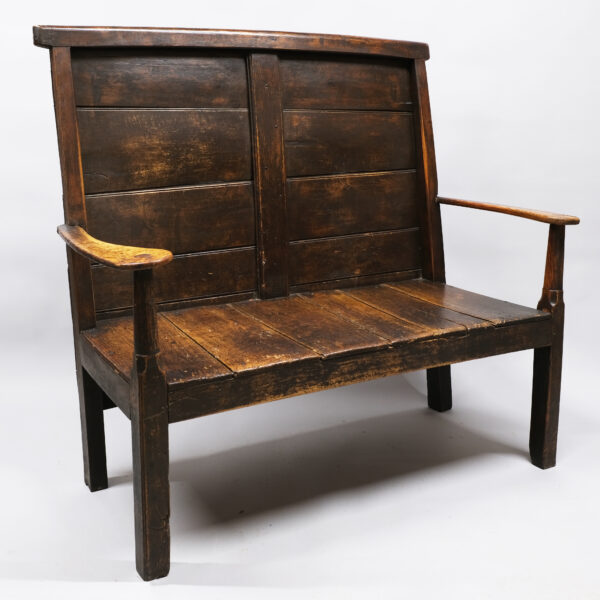
A late 18th century primitive oak settle, with framed panelled back, the paddle shaped arms on turned supports. Good colour and patination. England. C.1790 W134cm x D61cm x H128cm. Wakelin & Linfield
Salvaged timber provided some of its raw materials, says exhibitor William Carr of William Carr Antiques: “Vernacular furniture was often made of discarded timber found in derelict buildings, such as ecclesiastical buildings, notably after Henry VIII’s dissolution of the monasteries.”
Vernacular can include ceramics and kitchenalia. William Carr sells tin-glazed earthenware and patterned spongeware, which was sometimes cheaply decorated using potatoes. Candlesticks, once useful for fireside reading, are now prized for their sculptural qualities, not just their functionality. A good example is rushlight holders – rushlights are a type of candle made of rush soaked in tallow – which were often made of wrought iron and decoratively curvilinear.
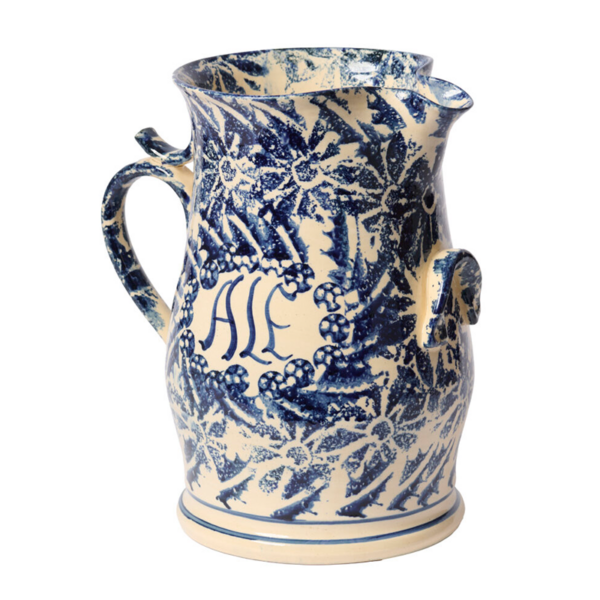
An oversized C19th spongeware ale jug offered by Garden Artefacts at a past Fair.
Today vernacular is valued both for its honesty of materials and tactility. Take the humble butcher’s block, once used to chop meat on and now often repurposed as a pleasingly tactile table, valued for its rugged, rough-hewn texture.
Vernacular’s popularity received a boost in the 1980s and 1990s. The Regional Furniture Society, founded in 1986, held exhibitions of vernacular at Temple Newsom House, Leeds. And Christopher Gilbert expounded authoritatively on it in his 1991 book, English Vernacular Furniture, 1750-1900. Vernacular continues to appeal thanks to the unique character and patina of every piece. It was never made to be fashionable and so is timeless.
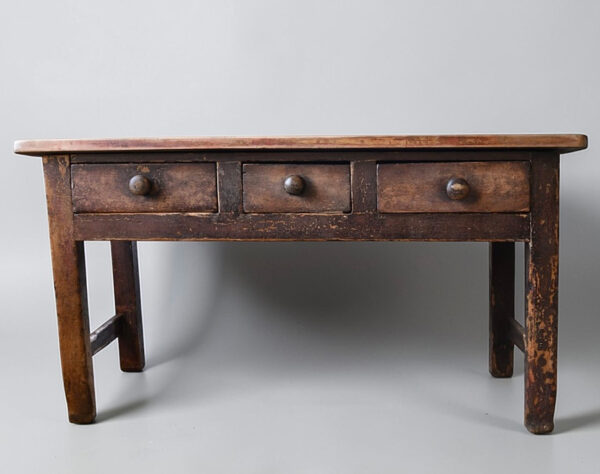
19th Century preparation table with three drawers and lots of character. The top is comprised of sycamore with the base made in pine. Circa 1850. Rogers-Forghani
Early country furniture
This strand of vernacular pertains to purely furniture found in cottages and farmhouses. It was documented in landscape gardener John Claudius Loudon’s Encyclopedia of Cottage, Farm and Villa Architecture and Furniture of 1833. He pointed out that village joiners’ skills at making “carpentry work connected with the farm” – including wheelwrighting, making field gates, carts and ladders – merged with furniture-making.
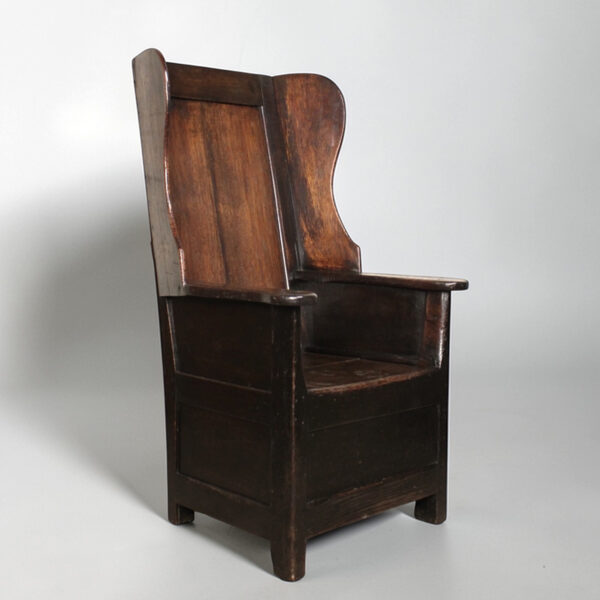
A beautifully preserved C19th English lambing chair in excellent condition. It has a rich, well-developed patina and all the hallmark features of the form: a high back and extended sides designed to shield the sitter from drafts. Circa 1860. Rogers-Forghani
Traditional English farmhouses had a front kitchen or living room with a smaller kitchen. Country joiners supplied these with a profusion of household furniture and utensils – butter scales, corn chests, kitchen tables, tripod tables for serving tea, clock cases, rocking chairs, oak dressers and wall-hung corner cupboards. Exhibitor 1923 Antiques has an 18th-century Welsh wall unit with two open shelves, while exhibitor Rogers-Forghani is selling a tilt table with a circular top and baluster stem with tripod supports. Another staple of country furniture is the high-backed oak or pine lambing chair. Typically positioned by the hearth, this incorporated a drawer that could be used to keep new-born lambs warm.
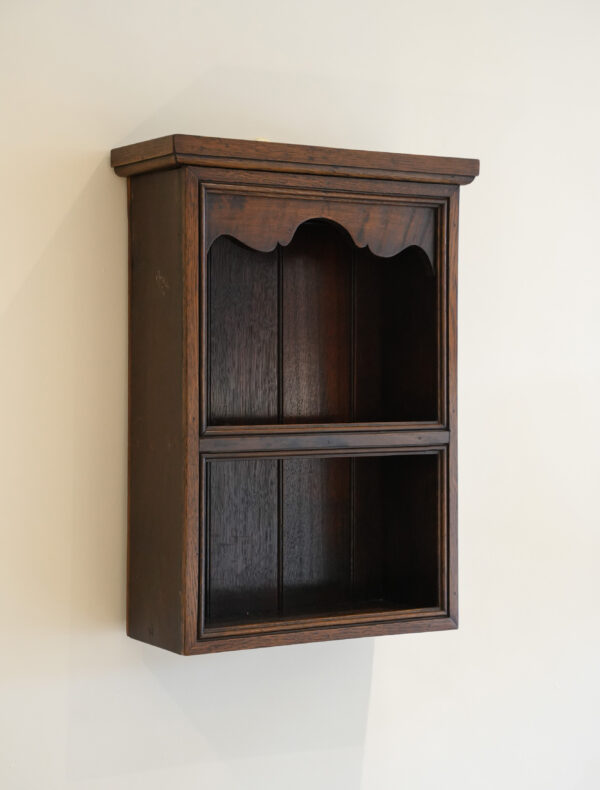
Welsh wall shelves constructed in 18th century timber. Two open shelves with beautiful hand worked joinery all over. 53 cm high x 39 cm wide x 15 cm deep. 1923 Antiques
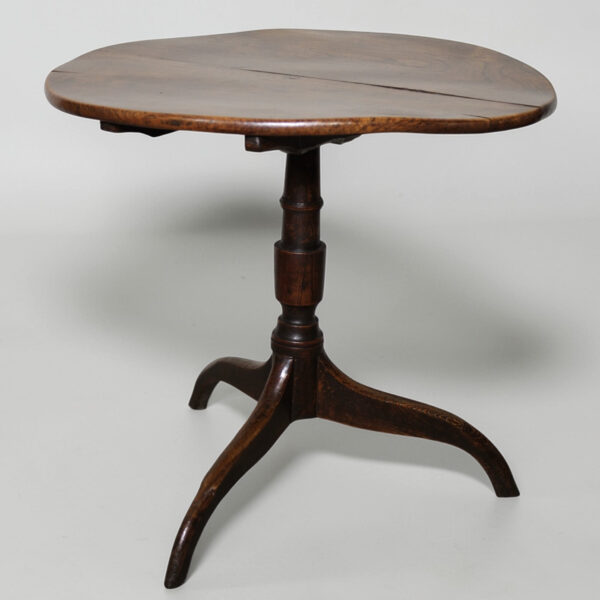
Tilt table with wonderful undulating circular top with a strong sculptural presence, raised on a finely turned baluster stem with tapering, spider-like tripod supports. Circa 1840. Rogers-Forghani
Exhibitor Extraordinary Objects sells hedge chairs made by hedge carpenters (woodworkers who crafted furniture using locally sourced raw materials, such as shapely wood found in hedgerows). “Hedge chairs are utilitarian but also happen to be very beautiful,” says Michael Snelle of Extraordinary Objects. “These were often repaired and seeing this kind of human imprint on a chair makes people feel connected to it.”
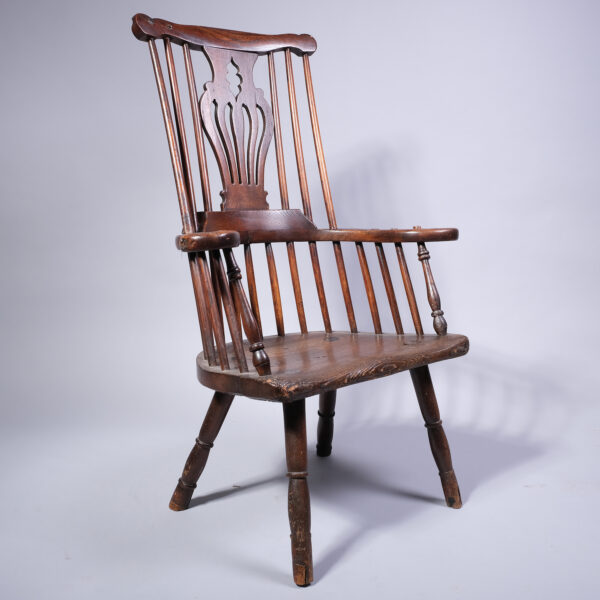
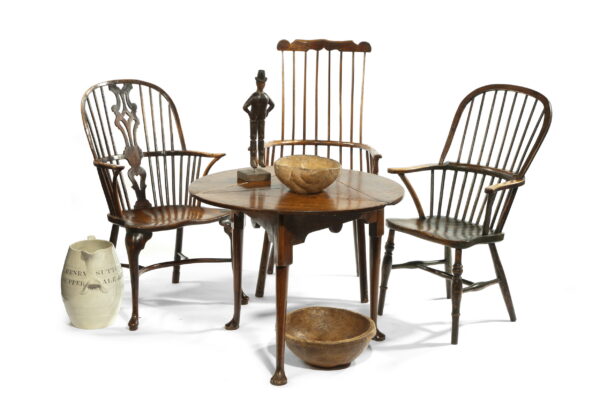
A mid-18th century comb back Windsor chair in ash and elm, the shaped top rail above pierced vase splat, the single piece bow with outswept arms on turned arm supports, the shaped seat raised on four turned legs. England. C.1760. W74cm x D50cm x H105cm. Wakelin & Linfield
Regional variations
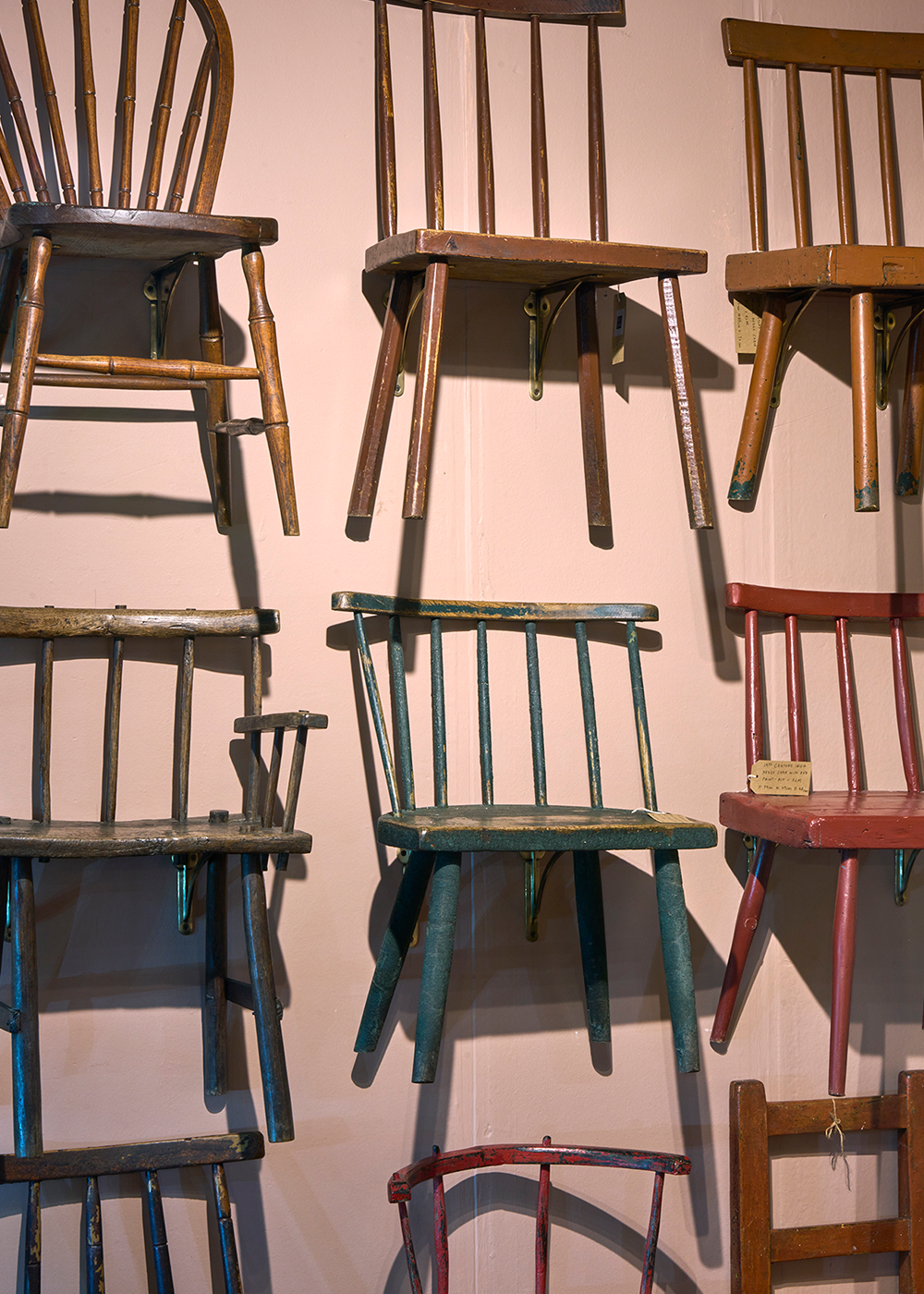
The Windsor chair is a key example of a vernacular design that varied depending on where in Britain it was made. A type of turned, stickback chair, this originated in the 18th century, and was often made by wheelwrights. “It’s possible to pinpoint where Windsor chairs were made,” says Rupert McBain of exhibitor McBain & Byrne. There are identifiable differences between stickback chairs made in Cumbria, Wales, Durham.” Another typical vernacular chair is the ladderback, featuring horizontal slats between two vertical posts.
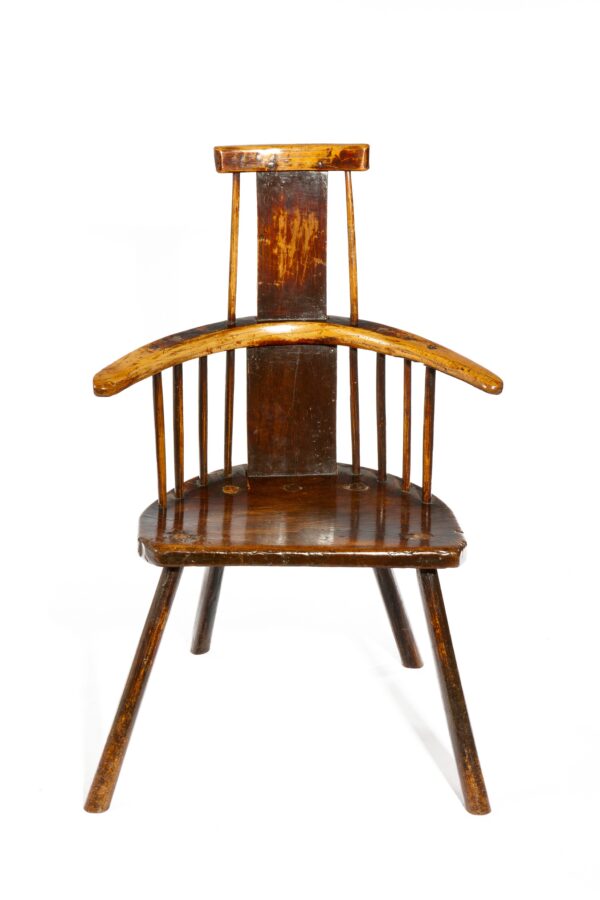
An example of a Carmarthenshire stick back chair. Welsh circa 1800.
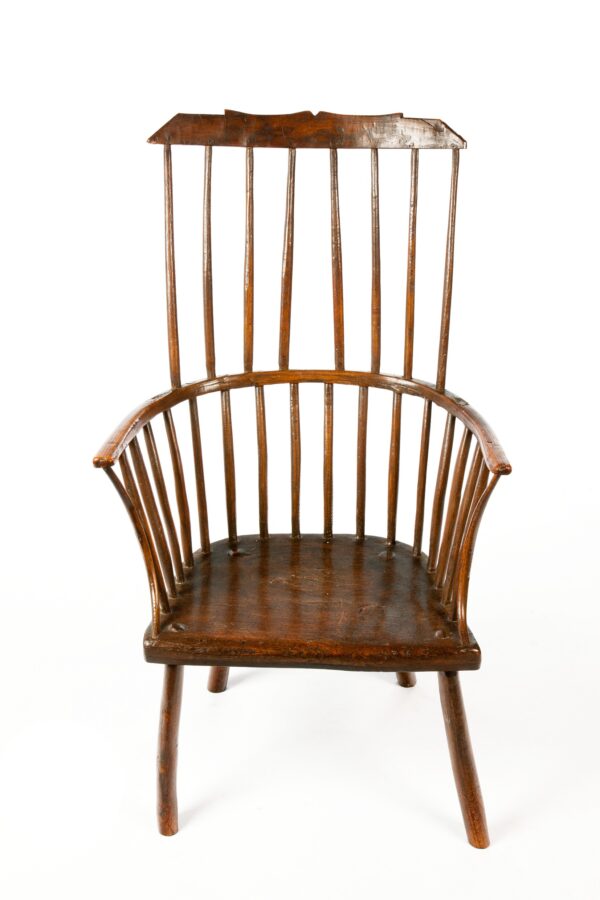
Sussex-style chair by Heal’s, circa 1910-1915, courtesy 1923 Antiques
In the mid-18th and early 19th centuries, there was a crossover between chairs made unselfconsciously following regional traditions and the tastes of sophisticates. Landscape architects and arbiters of taste Capability Brown and William Kent cultivated a more naturalistic approach in parks and gardens – the picturesque tradition – in reaction to formal, geometric French garden design, and Windsor chairs perfectly chimed with this sensibility.
Industrial and functional
Vernacular extends to robust, exceptionally practical furniture suited to public and institutional places. A good example is the alehouse, which evolved from kitchens in farm dwellings whose owners brewed beer and charged customers to have a drink there. Their furniture was generally restricted to round drinking tables and bar stools. Between the 1570s and 1630s, the number of alehouses in England doubled from around 24,000 to around 50,000, according to Mark Hailwood, writing in the journal, Brewery History. Also popular in alehouses and taverns were cricket tables (which have no connection to cricket). The sturdy, three-legged table was suitably stable for uneven floors in taverns. McBain & Byrne is selling an early 19th-century example with a steamed bentwood border.
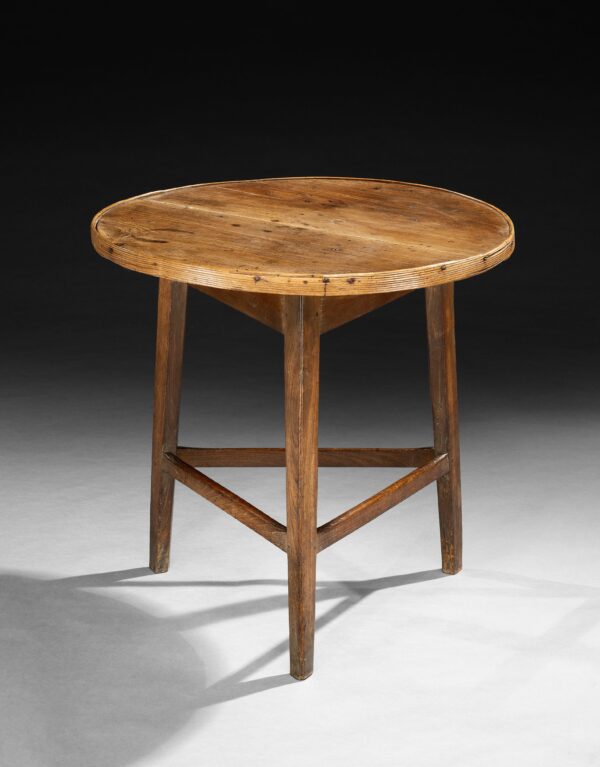
An exceptional ash cricket table of rare form with the original steamed bent wood border. English Circa 1800.
Ht 72cm / 28.5 inches, Width 71cm / 28 inches. McBain & Byrne
Functionality and patina converge in another example of vernacular – 19th-century school desks, whose surfaces are often carved with the markings of schoolchildren. Furniture from hospitals, offices and factories is also often classified as vernacular.
Elevated vernacular
In 19th century Britain, the increasingly affluent bought more finely crafted, expensive furniture. Reflecting social aspirations, vernacular designs were sometimes embellished or modelled in ways that elevated them. Elaborate Windsor chairs fall into this category. McBain & Byrne is selling four Georgian comb-back Windsor chairs attributed to the Thames Valley region, dating from circa 1760/ 1770. These have a shaped crest rail, turned legs and a walnut vase-shaped splat (the splat is the decorative central element of a backrest) atop an elm seat.
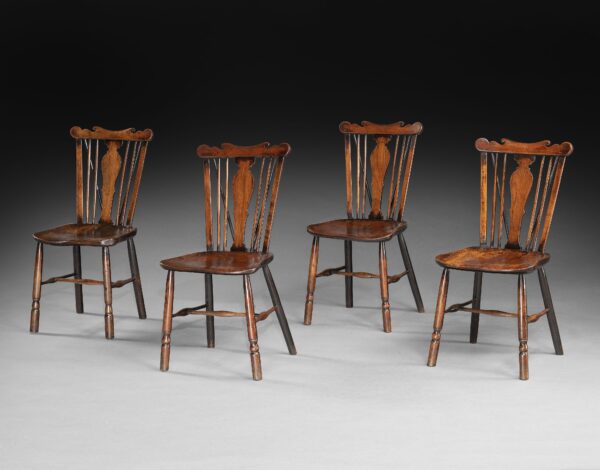
A set of four Georgian comb-back Windsor chairs attributed to the Thames Valley region. Shaped crest rail, turned legs and walnut vase-shaped splat above an elm seat. English, Circa 1760/70. These are country chairs of sophisticated form, with exceptional colour and patination. McBain & Byrne
Similarly, in the 19th century inexpensive pine was frequently painted to elevate it. Plain wooden furniture was often painted with a faux-woodgrain, simulating finer wood. Furniture with painted or stencilled folk motifs, imported from Europe, also appealed in Britain.
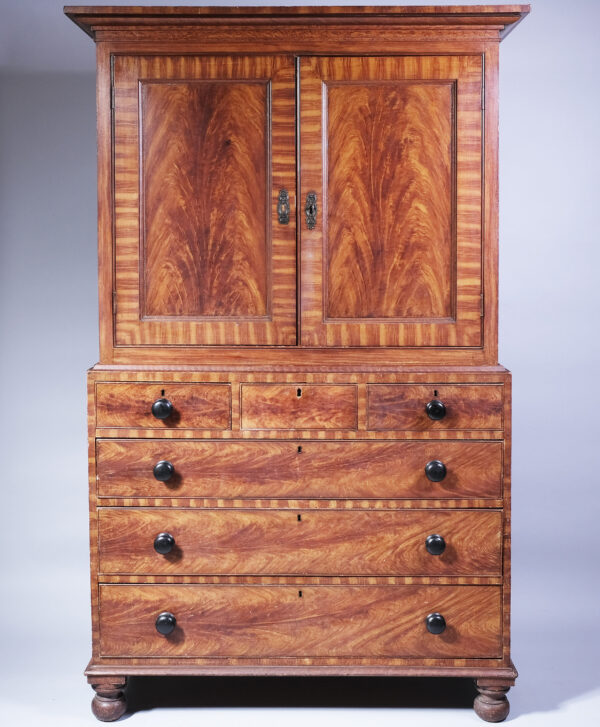
A truly unique C19th English housekeepers cupboard with original feather work scumbled paint finish replicating flame mahogany. England C.1840. A rare folk art survivor in remarkable unrestored original condition. W132cm x D210cm x H59cm. Wakelin & Linfield
The postwar revival
Production of authentic vernacular dwindled at the beginning of the 20th century. Garden designer Gertrude Jekyll lamented in 1904: “Now alas, this fine old furniture is rare in these country dwellings. It has been replaced by wretched stuff… It is even more noticeable in farmhouses where even if a good piece… remains, it is swamped by… things that are flimsy and meretricious.” But vernacular in Britain was rediscovered in the economically straitened postwar years by a young generation seeking to furnish their homes with affordable items. A backlash against futurism and modernism in the 1970s ushered in a renewed appreciation of hand-crafted, historical design, eclecticism and natural materials and the vernacular revival dovetailed with this. Vernacular’s unfussy yet sculptural forms came back into vogue as hierarchical values were rejected and more informal lifestyles adopted.