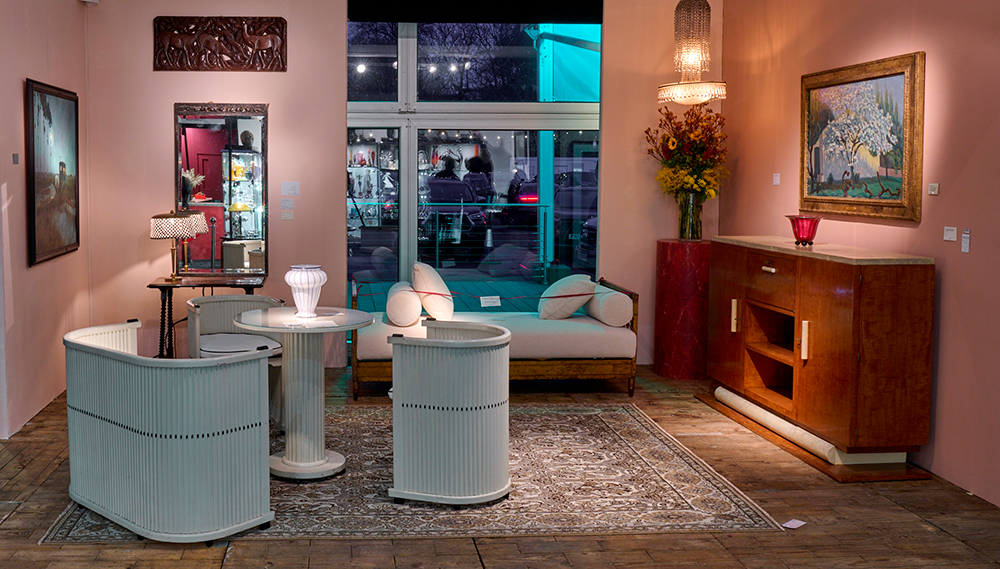
At the 2026 Winter Fair, our foyer display – a room set circa 1920 – spotlights avant-garde design from the fin-de-siècle Vienna Secession mingled with international, early modernist and Art Deco pieces. They stand out for their streamlined forms and high quality craftsmanship influenced by Britain’s Arts and Crafts movement, with its roots in the philosophy of John Ruskin and spearheaded by William Morris from the 1850s. Encompassing furniture, lighting, glass and art, the pieces displayed are lent by exhibitors who have a passion for some or all of these periods, such as Two Poems, Justin Evershed-Martin, 1923 Antiques and Morgan Strickland.
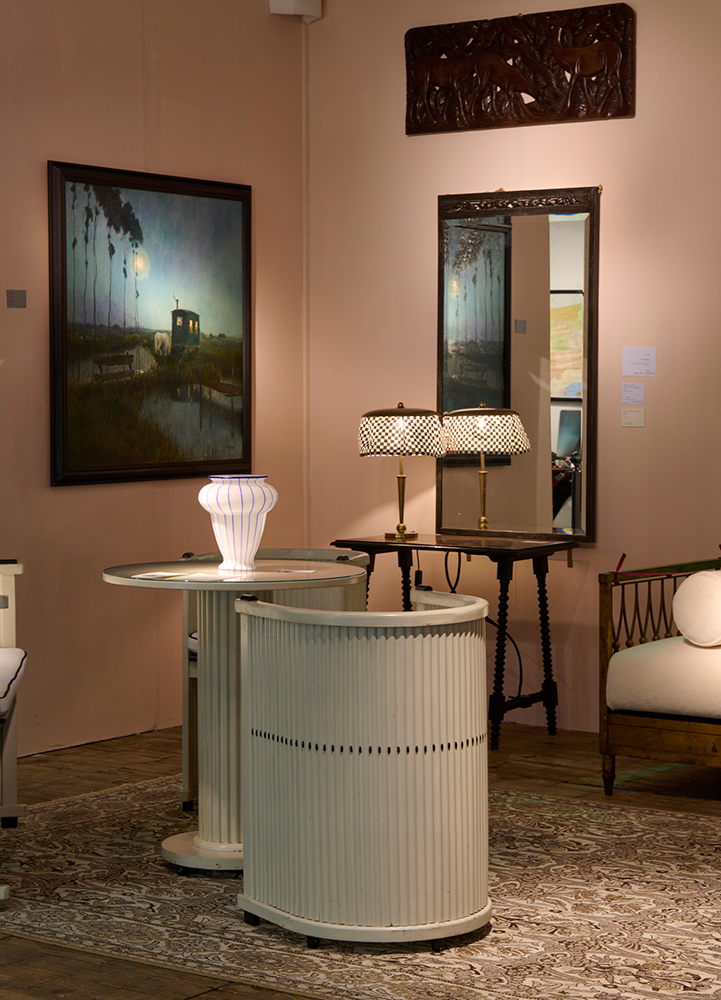
The Fair’s Foyer Display setting emulates a European sitting room circa 1920, where the fin-de-siècle Arts and Crafts and Art Nouveau periods move into modernism and early Art Deco. Here showing a 1911 painting by Belgian artist Bernard de Maere (1887-1954) lent by Kiszeley Fine Art, an early 1920s bronze mirror and daybed in the style of Jean Royère (both from Justin Evershed-Martin), a Vienna Secessionist suite, and a rare Art Nouveau design Qum carpet, Persia c.1930 (from Gallery Yacou).
The Vienna Secession is less on people’s radar than the British Arts and Crafts movement, which heavily influenced it. Yet design produced by the Secession and its offshoot, the Wiener Werkstätte, is proving covetable today, and inspiring young interior designers. The Vienna Secession was co-founded in 1897 by a coterie of like-minded Austrian artists, architects and graphic artists, whose ringleader was painter Gustav Klimt. KIimt then was an established artist and, along with architects Otto Wagner, architect and designer Josef Hoffmann and artist Koloman Moser, was a member of the conservative Vienna Künstlerhaus (Vienna House of Artists). But they had all grown frustrated by its adherence to stale academicism, historicism and Classical ideals.
The movement’s name was derived from the verb to secede, meaning to break away. It fostered creative freedom in art, architecture and the applied arts. Its artists dug beneath the purely representational to plumb psychological depths. This occurred in the context of Sigmund Freud’s exploration of the subconscious and Arnold Schoenberg’s radical reinvention of Classical music. The Secession had a magazine called Ver Sacrum, meaning Sacred Spring, which itself suggested renewal.
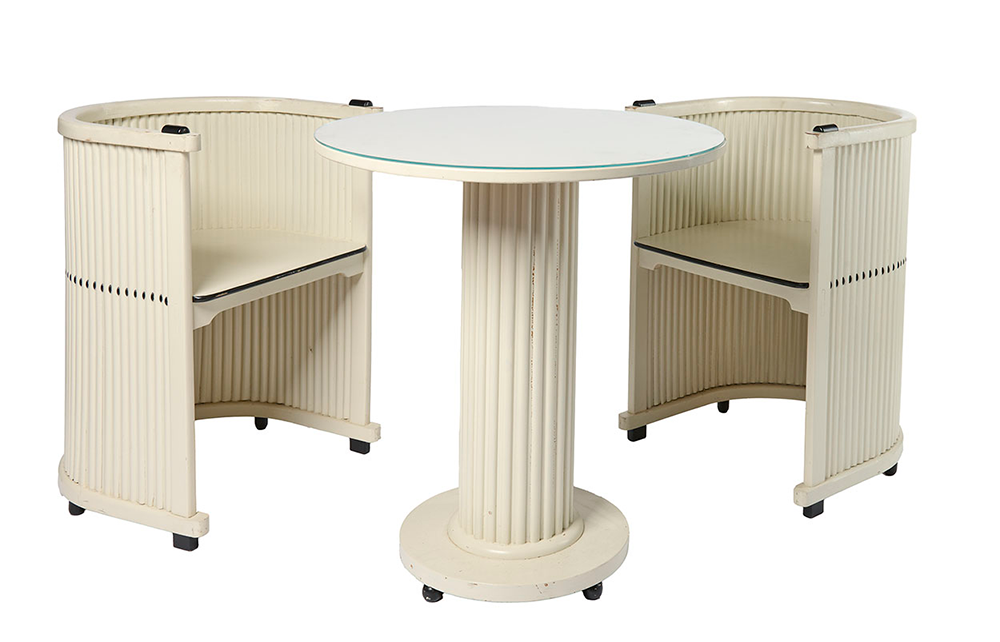
Part of a rare Secessionist suite by Hans Günther Reinstein (1880-1938) consisting of two chairs, a bench and table, with Two Poems
“The Vienna Secession aimed to unify fine art with the applied arts –architecture, design, craft – into a holistic movement,” says Ed Morris of 1923 Antiques. In 1903, Hoffmann and Moser established an offshoot of the Secession – the Wiener Werkstätte (Vienna Workshop), which produced furniture, ceramics, silver, furniture, graphic arts and fashion.
Vienna’s location at the crossroads of Austria and Hungary gave further impetus to the Secession: in the city’s many coffee houses, its multicultural, migrant community freely exchanged ideas. Vienna had art schools that encouraged innovation, such as the Academy of Fine Arts Vienna and the Vienna School of Applied Arts. The latter was more progressive for admitting women, many of whom went on to design for the Wiener Werkstätte.
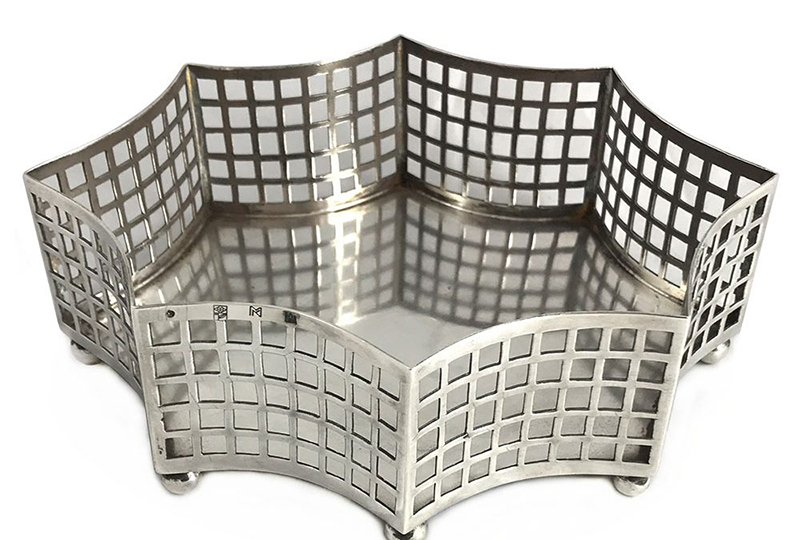
Secessionist silver basket on ball feet by Koloman Moser for the Wiener Werkstätte. Courtesy Morgan Strickland Decorative Arts
In 1907, Hoffmann also co-founded the influential Deutscher Werkbund (German Association of Craftsmen), based in several German-speaking cities, which similarly advanced modernism.
The Vienna Secession was international in character. One of its main goals was to exhibit work by modern and international artists. To that end, architect Joseph Maria Olbrich designed an exhibition hall where work by Auguste Rodin, Edvard Munch, Claude Monet and designer, architect and exponent of the Glasgow School (a Scottish strand of Arts and Crafts) Charles Rennie Mackintosh, was shown. “The Vienna Secession was similar to the Glasgow School,” says Morris. “Hoffmann and Mackintosh were great friends,” says Toby Ziff of Two Poems.
The Secessionists had a motto – “To every age its art, to every art its freedom”, a clarion call to art as contemporary, an expression of its time. This potentially opened the way for all forms of expression and styles yet the applied arts of the Secession and Wiener Werkstätte had a recognisable aesthetic that crossed over with that of the Glasgow School – relatively austere and pared-back, often crisply rectilinear, with a predilection for squares (a hallmark of Hoffmann’s) and grids and tonal contrasts in wood, creating clean, graphic geometric patterns.
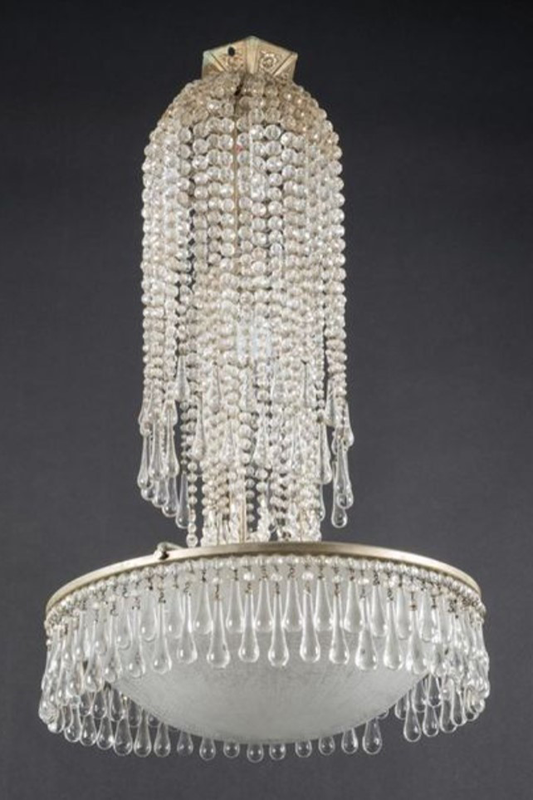
Early 1920s Daum Frères crystal drop chandelier, with Justin Evershed-Martin
“This was a reaction against heavy, ornate Victorian maximalism,” says Ziff. It was also a backlash against the extravagantly sinuous lines of Art Nouveau. “The period from 1890 to the 1940s was a sweet spot. It was sought-after in the 1980s and 1990s and Vienna Secession pieces are popular again but they’ve become rare. They’re easy to understand and enjoy because of its clarity. I’ve got a beautiful, two-tone Secessionist mirror in ebonised and cerused oak [treated with lime].”
“My personal preference is for early 20th century Continental makers,” says Justin Evershed-Martin. “I particularly like Vienna Secession design which was more ground-breaking than the architecture it was intended to complement. The Dodecahedron lantern by Adolf Loos, of around 1905, is a perfect example of a balance of simplicity and richness, and feels timelessly modern: it could hang in an any interior today, whether richly ‘period’ or minimally spartan. I also stock French and Belgian pieces that tread the line aesthetically between simplicity and the boldly sculptural I like so much in Viennese design.”
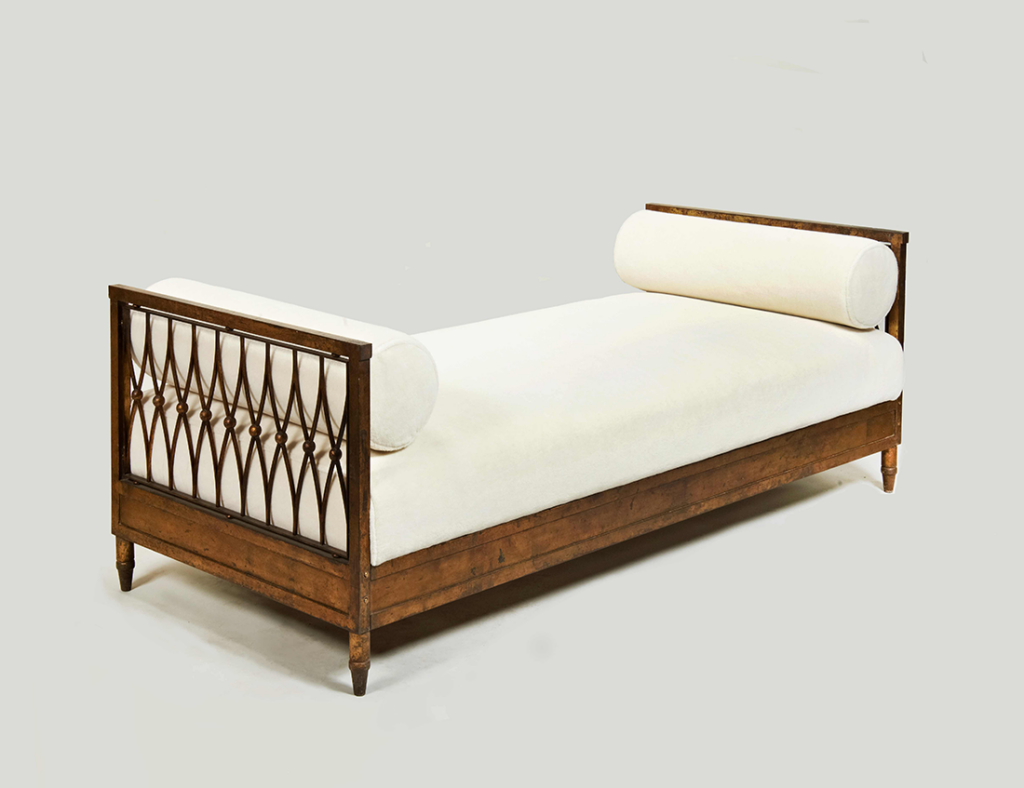
Day bed attributed to Jean Royère (1902-1981), one of the leading figures of French 20th-century decorative arts. Courtesy Justin Evershed-Martin
“I have a rare set of Thonet horseshoe armchairs – so-called because of their curved, continuous backrest and armrest – that bridge the gap between the Vienna Secession, with its love of elegantly thin lines and wood, and Bauhaus modernism that translated that simplicity of form into near-abstraction in tubular metal,” says Evershed-Martin.
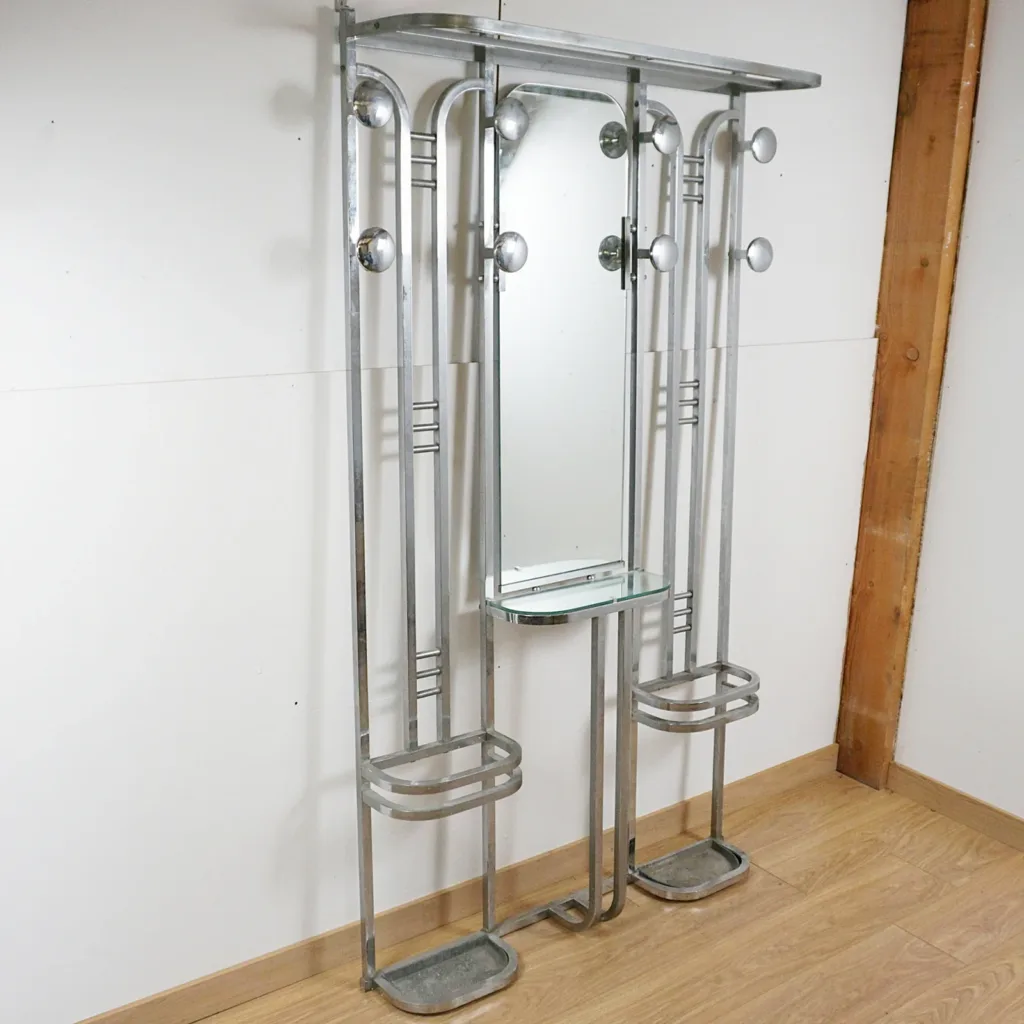
Polished chrome modernist hall stand, with Bauhaus inspiration, from the early Art Deco period. Courtesy Markies Antiques
English Arts and Crafts design appeals greatly today, concur Morris and Evershed-Martin. “The Arts and Crafts movement began as a reaction against poor quality, soullessness and inhumane working conditions brought on by the Industrial Revolution,” says Morris.
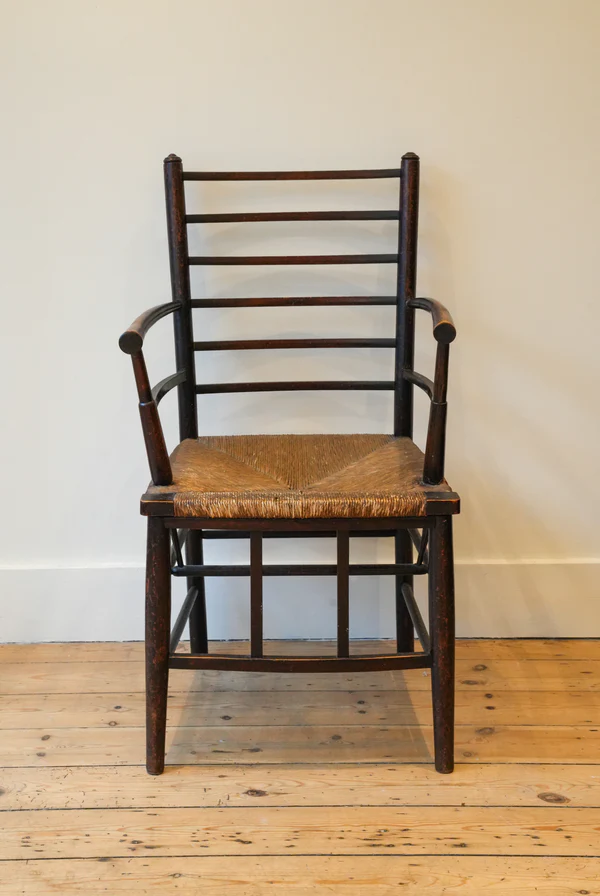
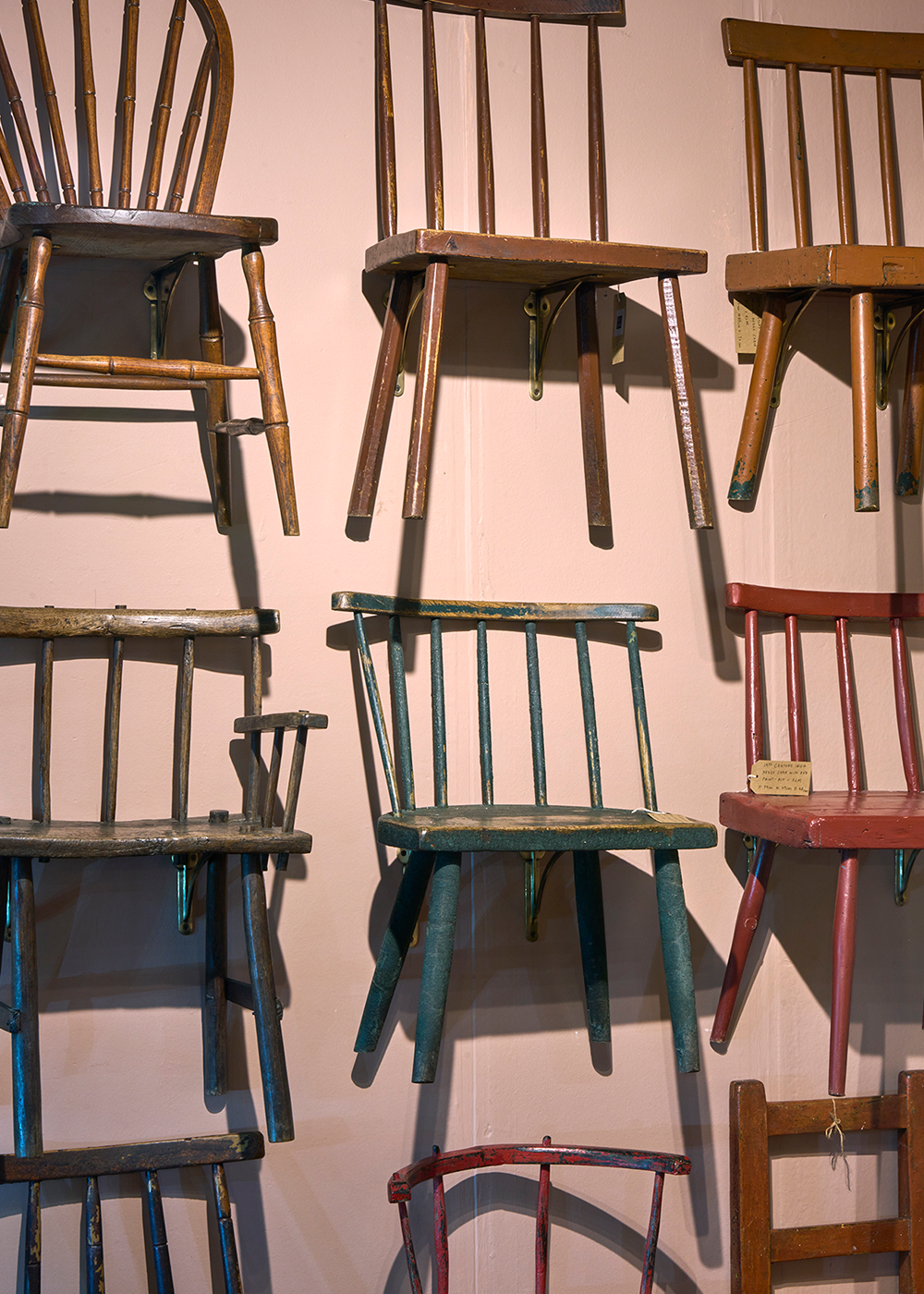
Sussex-style chair by Heal’s, circa 1910-1915, courtesy 1923 Antiques
“The relevance of British Arts and Crafts pieces with their roots in a rejection of mass-production is easily translated to today’s buyers, given their immediate authenticity,” he continues. “Their organic aspect – their respect for materials linked to nature – appeals today in the same way it did to many a century or more ago. Arguably their appeal is offered anew with each generation in slightly different guises. It’s an unbroken line in the UK from Morris to Edward Barnsley and Ernest Gimson, advocates of the Cotswold School of Arts and Crafts, and the continuing success of the Barnsley Workshop and, contemporaneously, Robert ‘Mousesman’ Thompson and his followers in Yorkshire, right up to Terence Conran and Sean Sutcliffe’s project Benchmark Furniture, founded in 1984. Arguably all would acknowledge the influence of European designers. Gimson and Barnsley’s Dutch collaborator, Peter Waals, brought with him the aesthetics of the Amsterdam School and Viennese and Belgian design to deepest Gloucestershire.”
According to Morris, “The Arts and Crafts movement appeals in our world of fast-growing technology, high stimulation short-form content like social media and decades of mass-produced tat in which people are striving for a sense of the past, slower times and simple, well-made, functioning, beautiful objects – rather like record shops and bookshops have enjoyed a resurgence since music and reading went online. Antiques of this period, which championed traditional craftmanship, from the Cotswold School to London retailers Liberty and Heal’s, are made of beech, ash, elm and oak that have lasted 100 years and more, and rush that has stood the test of time. Our clients, be they private ones or interior designers, love items with patina, stories and meaning to them.”
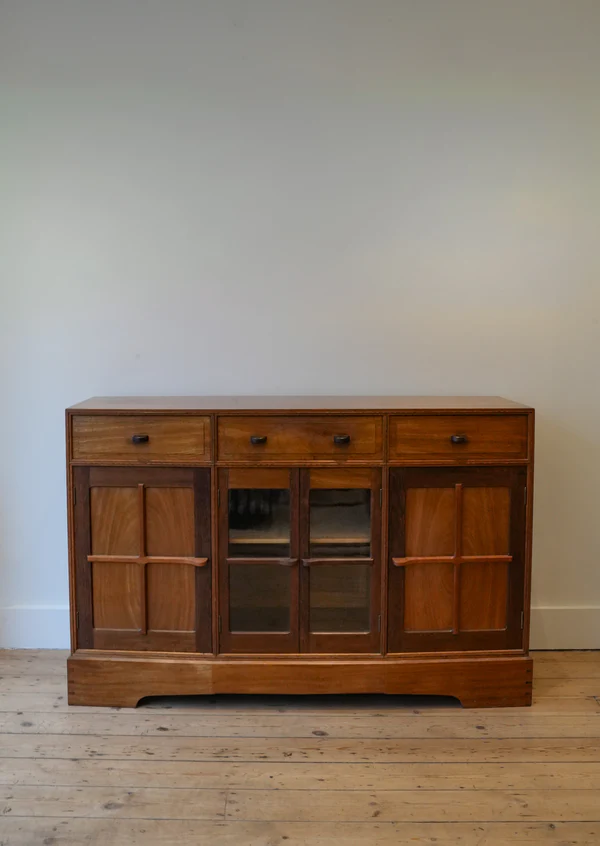
A Cotswold School-style sideboard in mixed timbers with laburnum drawer pulls, inspired by Edward Barnsley. Courtesy 1923 Antiques
For such clients and fans of the Arts and Crafts movement (and its many offshoots), the appeal of its furniture’s tactile qualities and warm patina can’t be underestimated, concludes Morris: “What can be better than sitting in an Arts and Crafts chair, candle on, reading a favourite book?”
Article by Dominic Lutyens for The Decorative Fair. Dominic Lutyens/The Decorative Fair. Dominic is a London-based writer and journalist, author of Perriand, a monograph of Charlotte Perriand (Welbeck Publishing/Headline). Follow him @dominiclutyens and @70sstyleanddesign
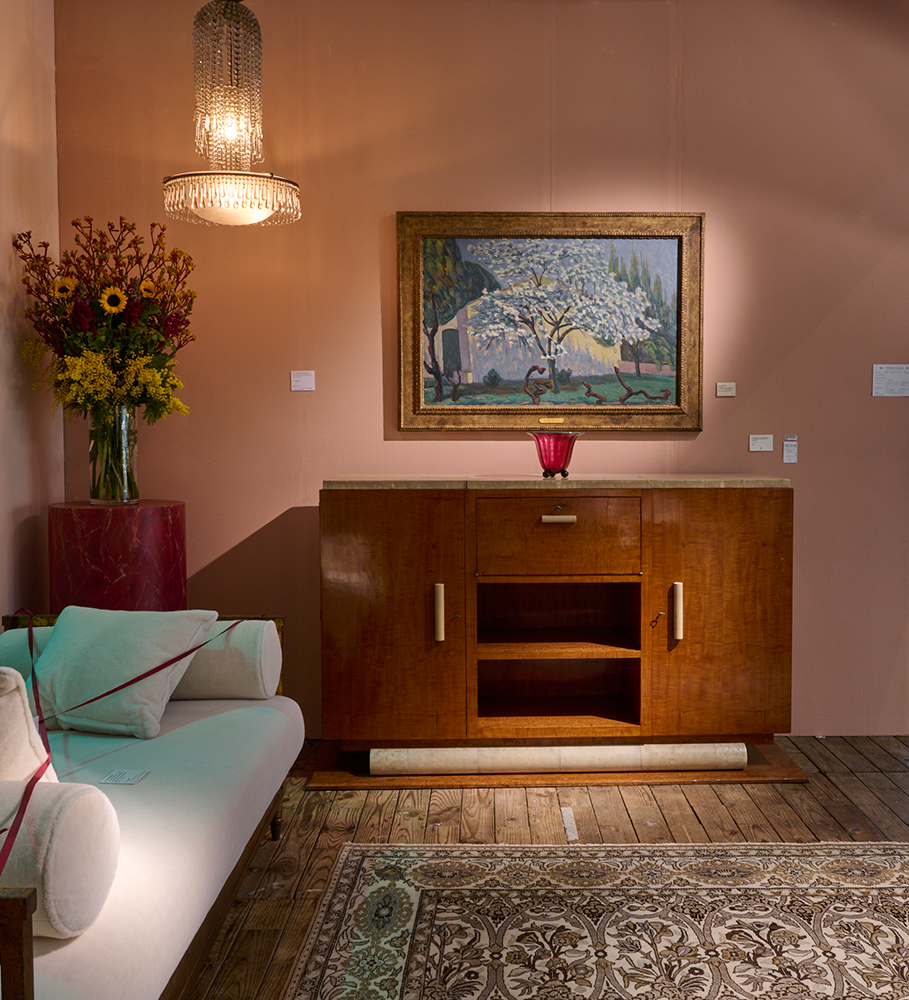
The Winter 2026 Fair Foyer Display showing an early Art Deco period sideboard or console in parchment and shagreen, lent by Two Poems, above which hangs a Post-Impressionist work by Robert Deborne (1870-1944) from Darnley Fine Art.